Site Credits
Design: strom.works
Development: IntelligentWP
Hosting: Intelligent Hosting
Wiseled supplies IR illumination, AI-based optical detection and active deterrence systems for counter-UAS applications.
The threat posed by small unmanned aerial systems to military, security and critical infrastructure targets has changed faster than the procurement systems designed to counter it. UAS platforms are now widely available, increasingly capable and regularly deployed by state and non-state actors against targets that were previously considered safe from aerial attack.
Countering that threat requires a layered capability: detection, classification, tracking, identification and – where authorised – an active response. Radar and radio-frequency detection systems handle parts of that chain well. Optical detection and identification handles the parts they cannot: positive visual classification at range, particularly for small, low-observable UAS operating at low altitude in cluttered environments where radar and RF performance degrades.
Wiseled provides the optical illumination layer that makes that classification possible at night and in low-light conditions – and the active deterrence capability that constitutes a proportionate non-lethal response once a threat is confirmed.
Small UAS are difficult optical targets. They are fast, manoeuvrable and increasingly available in configurations that produce minimal thermal signature. In daylight, camera-based detection and classification is tractable. At night, without active illumination, optical classification at operationally relevant ranges is not.
Thermal imaging addresses the detection problem in darkness – passive thermal sensors do not require illumination and detect heat signatures reliably. But thermal imaging alone does not support the image quality needed for positive classification of small UAS at range, and it provides no deterrence capability.
Active near-infrared illumination recovers optical performance in darkness. Combined with AI-based classification software capable of distinguishing UAS signatures from birds, insects and background clutter, it forms the optical identification layer that thermal alone cannot provide.
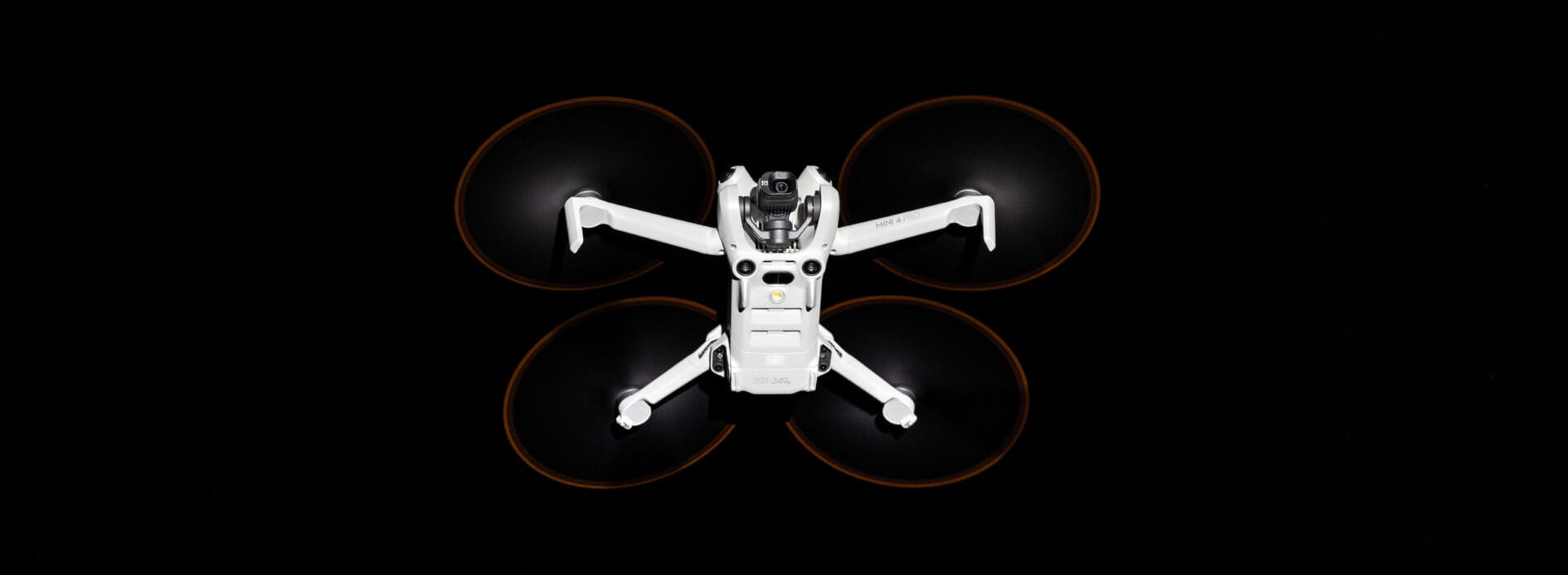
Wiseled’s IR illuminators provide near-infrared illumination at 940 nm – invisible to the naked eye and to standard visible-band sensors – enabling camera-based optical classification of UAS targets at extended range in complete darkness. The illumination beam tracks with the host PTZ system’s zoom state, maintaining consistent target coverage as the sensor closes range on a cued contact.
940 nm wavelength minimises detection by NVG-equipped observers while maximising performance on standard CMOS camera sensors – the right balance for C-UAS applications where covert operation of the detection system is operationally significant.
Wiseled’s W-Q62 C-UAS configuration integrates with AI-based optical detection software providing library-less, automated UAS classification. Unlike RF detection systems dependent on signal libraries, optical AI classification works from visual and thermal signature data – effective against modified, custom-built and previously unseen UAS types.
Slew-to-cue integration automatically repositions and zooms the PTZ on confirmed UAS track data, with simultaneous tracking of multiple targets including swarm scenarios. Edge processing removes dependence on cloud connectivity – classification and cueing run locally at the sensor.
For confirmed UAS contacts requiring an active response, Wiseled’s FALCON searchlight platform provides white light strobe and optional green laser dazzler capability. White light strobe is the default first-response deterrence mode – high-output visible illumination that functions as a warning and degrades the UAS operator’s situational awareness. The green laser dazzler provides targeted non-lethal deterrence at extended range for confirmed threats where white light alone is insufficient.
Both deterrence outputs are independently controllable and can be pre-programmed into standard operating procedures or managed by a control room operator.
Wiseled C-UAS systems are designed for integration into broader multi-sensor architectures. The optical detection and illumination layer sits alongside radar, RF detection and acoustic sensors – providing the classification and identification capability that other modalities typically cannot deliver for small, low-altitude targets in cluttered environments.
See also: